
Greystone

After-Dark Curb Appeal · Richmond, TX

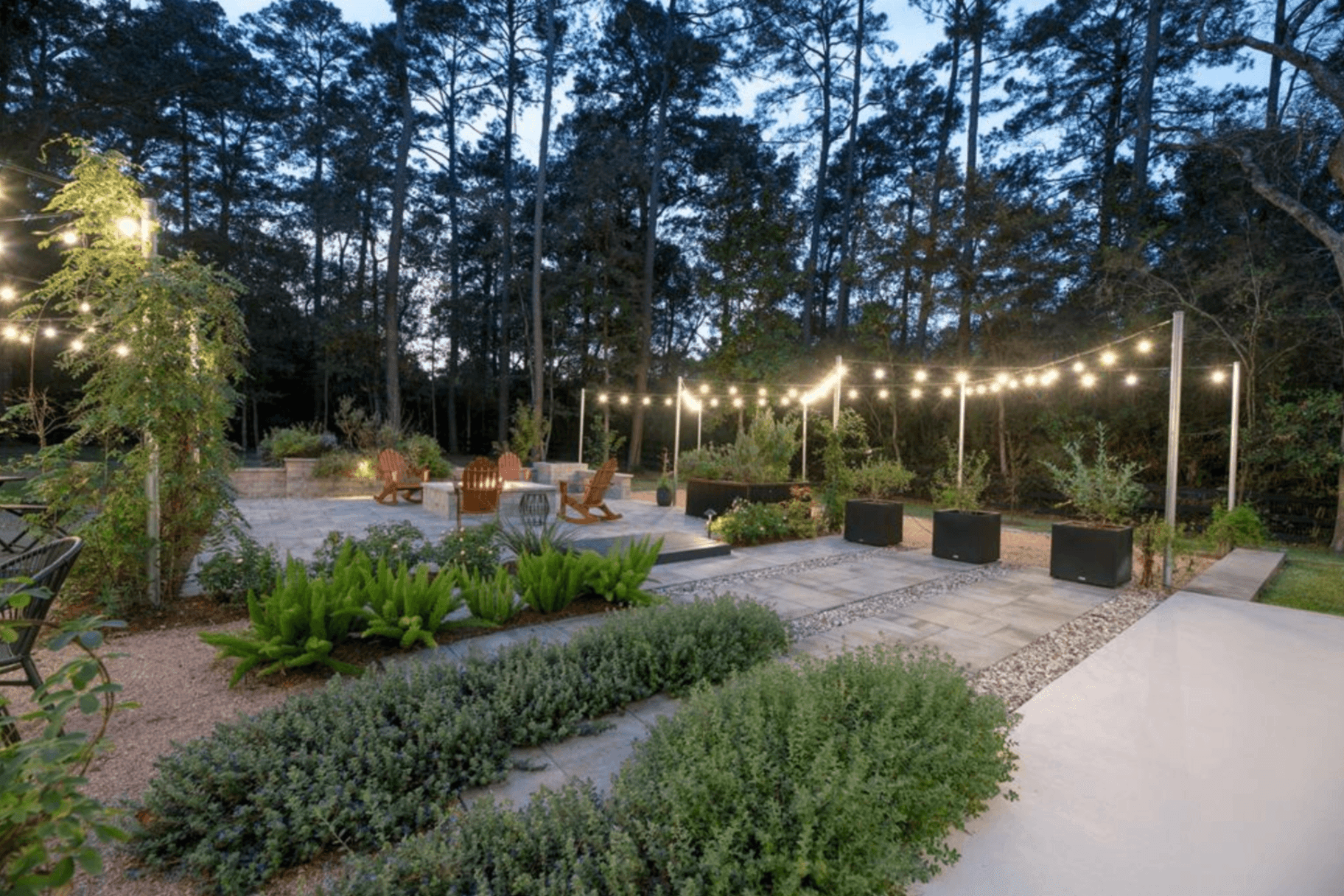
Landscape Lighting in Richmond, TX

The best time to design landscape lighting in Richmond is the month before the sod truck arrives. Across Veranda, Harvest Green, and the newer Fort Bend sections still filling in, we are often on site while the irrigation contractor is trenching and the beds are still bare dirt — which means wire can be sleeved under the future driveway, run alongside the mainline instead of across it, and terminated at fixture locations chosen from the actual house rather than a brochure elevation. Greystone Landscapes has been doing this work in the Houston area since 2005, and Richmond is the market where sequencing saves homeowners the most money. Come back after the landscape is finished and half of that advantage is already buried.

(281) 235-9143

Why here

Why landscape lighting make sense in Richmond

Landscape lighting in Richmond does more than look beautiful — it signals a well-maintained, premium property that stands out on the street. Growing suburb homeowners who invest in professional lighting consistently see the impact in curb appeal, security, and the number of evening hours they actually use their outdoor spaces.

01

Sleeve It Before the Sod Goes Down

On a new Fort Bend build, the driveway, the front walk, and the side yard concrete are all poured within a few weeks of each other. Every one of those slabs is a barrier that lighting cable will eventually have to cross. Two-inch PVC sleeves dropped in before the pour cost a few dollars each; boring under a finished driveway later costs a great deal more and takes a crew half a day.

We ask for three things at that stage: a sleeve under the drive near the garage return, a sleeve under the front walk, and a stubbed conduit from the panel side of the house to wherever the transformer will hang. Even if the lighting itself is a year away on the homeowner's budget, those three items make the future install straightforward and preserve the option to expand.

Fixture locations get marked on the same visit. Standing at the curb of a finished-shell house tells us where the gables break, which stone column deserves emphasis, and where the front door reads dark — none of which is knowable from a plot plan. We flag those points and the landscape crew plants around them instead of on top of them.

02

Sharing the Ground with Irrigation, Gas, and Fiber

New Richmond lots are crowded underground. Between the irrigation mainline, lateral runs to every head, a gas stub to the patio, low-voltage data, and the builder's downspout drains, a front yard can have five utilities in the first twelve inches of soil. Cutting one of them while pulling lighting cable is an avoidable mistake, and it is the reason we walk the yard with the irrigation contractor whenever the schedule allows.

Where we can, lighting wire follows the irrigation trench line at a consistent offset rather than cutting perpendicular across it. That keeps future repairs sane: a technician digging up a sprinkler lateral in five years finds our cable exactly where he'd expect it, at a known depth, instead of discovering it with a shovel.

Head placement affects fixture placement too. A rotor throwing across a bed will hammer a lens with hard Fort Bend water every other morning, and mineral film on glass dims a light noticeably within a season. We site fixtures out of the direct spray pattern where possible and specify glass lenses rather than acrylic so the deposits can actually be cleaned off.

03

Long Drives, Gates, and Entry Monuments

Outside the master-planned sections, Richmond still has real acreage — properties off FM 359, along the Brazos bottoms, and scattered through Pecan Grove where the approach from the road to the house runs several hundred feet. Lighting that distance is a different exercise than lighting a front yard. Voltage drop over a long run is the governing constraint, and the answer is usually a transformer positioned out near the load with a line-voltage feed to it, rather than one unit at the house fighting three hundred feet of copper.

Along the drive itself, the goal is edge definition, not runway markers. Widely spaced fixtures tucked into the planting on alternating sides, or downlights from the trees where a live oak allee exists, give a driver the shape of the pavement without a chain of glowing dots. We keep the mounting low and the beams aimed across the drive rather than down it so headlights and fixtures aren't competing.

Entry monuments and gate columns get treated as architecture. Grazing light from a recessed well fixture at the base brings out mortar joints and stone texture on a masonry column, and address numerals usually want their own small dedicated source rather than borrowed spill. Where a gate operator and keypad are involved, we coordinate with the gate contractor so the same trench serves both and the operator's photo eyes aren't blinded by a badly aimed fixture.

Livestock and equipment change the details on these properties too. Fixtures within reach of horses or cattle get moved, guarded, or replaced with in-grade wells, and cable near a working pasture goes deeper than the shallow depth we'd use in a residential bed. Along fence lines that get bush-hogged, we mark the run and keep it well clear of the mower path so a routine maintenance pass doesn't take the front of the property dark.

04

Path Lighting That Works for Older Eyes

Richmond has a substantial active-adult population, and Del Webb Sweetgrass in particular sends us a steady stream of homeowners whose priority is not drama but confidence walking to the mailbox after dark. Vision changes with age in two ways that matter here: less light reaches the retina overall, and recovery from a bright glare source takes considerably longer. A single unshielded fixture can leave someone effectively blind for the next several steps.

So the specification changes. We use fully shielded path fixtures with a solid top and a deep hood, more of them at closer spacing rather than fewer bright ones, and we aim for even coverage with no dark gaps between pools. Steps, grade changes, and the transition from walk to driveway each get a dedicated light, because those are where falls happen.

Color temperature is part of it as well. We generally specify warm 2700K sources throughout, which read comfortably and flatter both brick and planting, and we keep every fixture in a system to the same temperature. Mixing warm and cool lights along one walkway creates the impression of uneven brightness even when the measured light levels are identical.

05

Pricing, Approvals, and What a Real Proposal Contains

Pricing here follows the fixture count. Each installed low-voltage light in Richmond runs $250 to $450 apiece once you count the transformer behind it, the cable in the ground, the splices, and the crew time. A typical two-story on a Veranda or Harvest Green lot lands at 12 to 20 fixtures and $4,000 to $9,000 all in. Acreage properties with a lit approach, gate columns, and specimen trees regularly reach $10,000 to $25,000 and upward.

On approvals, the 12-volt system itself is rarely the issue. The 120-volt circuit that powers the transformer is electrical work, and whether it requires a permit and inspection depends on the jurisdiction your address falls under — parts of Richmond are city, parts are unincorporated Fort Bend County, and the answer differs. We determine which applies to your property and carry the licensed electrician and any fee in the written scope. Most Fort Bend master-planned communities also review exterior modifications, and we prepare that submittal package ourselves.

A proposal worth signing names the fixture manufacturer and finish, the wire gauge for each run, the transformer size and its unused capacity, the splice method, and the warranty terms on both parts and labor. If a bid is a single line item and a total, you have no way to compare it to anything, and no way to know whether the wire in your yard is heavy enough to support the two fixtures you'll want next spring.

What you get

What Richmond homeowners get

Low-voltage LED systems with decades of lifespan

Path and step lighting for safety

Uplighting to showcase trees and architecture

Accent lighting for gardens and water features

Smart controls and timer systems

Professional installation with underground wiring

How it works

Your Richmond project, step by step

01

Property walkthrough and lighting design

02

Fixture and color temperature selection

03

Underground conduit and wire installation

04

Fixture placement, aiming and controller programming

Landscape Lighting across Richmond

Our crews work throughout Richmond — including these neighborhoods and the surrounding area.

AlianaHarvest GreenLong Meadow FarmsVerandaPecan GroveWaterside EstatesLakes of Bella TerraDel Webb SweetgrassCanyon Gate at the BrazosRivers Edge

Questions

Landscape Lighting questions from Richmond homeowners

Landscape Lighting near Richmond

More services in Richmond

Popular pairings with landscape lighting: Pergolas, Paver Patios, Water Features.

Request a quote

Ready for landscape lighting at your Richmond home?

Greystone Landscapes has designed and built outdoor spaces across Greater Houston since 2005. Get a free on-site consultation for your Richmond project.

(281) 235-9143