
Greystone

After-Dark Curb Appeal · League City, TX

Landscape Lighting in League City, TX

Salt air decides which landscape lighting systems survive in League City and which ones are a two-year rental. Homes around South Shore Harbour, Marina Del Sol, and the Clear Creek waterfront sit close enough to the bay that chloride-laden moisture settles on every exterior surface nightly, and it attacks fixture housings, lamp sockets, and above all wire connections. Since 2005 Greystone Landscapes has been putting low-voltage systems in the ground throughout this region, and the specification we write for a League City address differs in real, itemizable ways from the one we write twenty miles inland. This page explains those differences, because they are most of what separates a system you forget about from one you keep repairing.

(281) 235-9143

Why here

Why landscape lighting make sense in League City

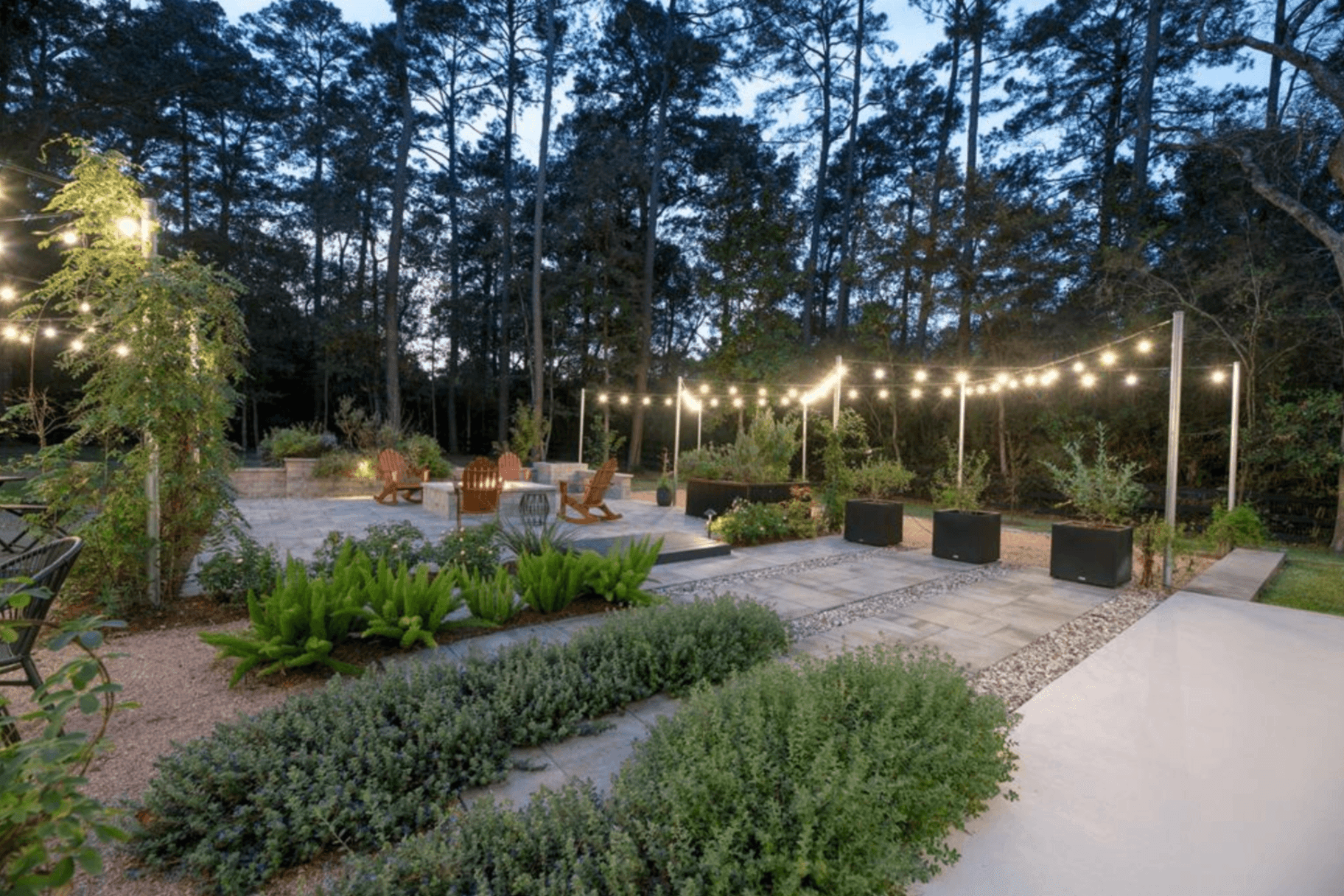
Landscape lighting in League City does more than look beautiful — it signals a well-maintained, premium property that stands out on the street. Master-planned community homeowners who invest in professional lighting consistently see the impact in curb appeal, security, and the number of evening hours they actually use their outdoor spaces.

01

Salt Air Is the Design Constraint Here

Painted aluminum is the default housing material in the big-box and builder-grade lighting world, and it is the wrong choice near Galveston Bay. Aluminum in a marine environment pits and blooms wherever the powder coat is chipped, scratched by a string trimmer, or breached at a threaded joint, and once corrosion starts under the coating it spreads beneath the finish where you cannot see it. The result is a housing that looks acceptable at ten feet and crumbles when a technician tries to open it.

We specify solid cast brass and spun copper for League City work, without exception on anything within a mile or so of open water. Neither metal rusts. Both develop a patina — copper moves toward brown and eventually green, brass toward a soft chocolate — and that patina is a protective layer rather than a defect. Homeowners who want the bright factory finish preserved should know that no coating holds that look outdoors on the bay, and we would rather say so before installation than after.

The hardware matters as much as the housing. Stainless mounting screws, stainless stakes or brass stakes rather than plated steel, and silicone or marine-grade gaskets at every lens seal. A brass fixture hung with plated steel screws still fails; the screws seize and rust-jack the lens frame, and in three years the fixture cannot be serviced at all.

02

Where Coastal Systems Actually Fail: the Connections

Ask any technician who services lighting on the bay side and the answer is the same: it is almost never the fixture, it is the splice. Salt-contaminated moisture wicks into a wire nut or a pierce-point connector, the copper strands corrode green, resistance climbs, and the fixture at the end of that run first dims and then goes out. Because the damage is inside a buried connector, the symptom looks like a bad light and homeowners replace perfectly good fixtures for years.

Our standard here is a fully encapsulated connection: heat-shrink butt splices with adhesive lining, or silicone-gel-filled connectors rated for direct burial, with the jacket sealed so no path exists for moisture to travel down the strands. Every splice is documented on the as-built plan so a future service call is a matter of going to a location rather than excavating a yard.

We also oversize wire more aggressively in this market than inland. Heavier gauge means lower current for the same load, less heat at terminations, and enough headroom that a marginal connection does not immediately drop the far end of a run below usable voltage. It costs more copper up front and it is the cheapest insurance in the entire system.

03

Lighting the Water Edge: Bulkheads, Docks, and Slips

Waterfront lots in League City light in three layers. The bulkhead cap takes small, tightly shielded fixtures aimed down at the water line so the edge of the property is unmistakable after dark — this is a safety measure first and an aesthetic one second. The lawn between house and water gets low, wide pools rather than tall sources, since anything bright at eye level reflects off the water and ruins the view you paid for.

Dock and pier lighting is its own problem. Fixtures there live in splash and spray, not just humid air, so we mount them under rail caps and stringers where the housing is shielded from direct wetting, keep every junction above deck level in accessible enclosures, and use recessed deck lights only where a properly gasketed, drainable housing can be set. Anything at the slip itself should be dimmer than instinct suggests; glare across black water is disorienting for anyone piloting a boat in.

A practical note about neighbors on a canal or the lake: light travels much farther over water than over grass. A fixture that seems modest on your bulkhead can be the brightest thing in someone's living room three hundred feet across the channel. We aim and shield with that sightline in mind, and we check the result from a neighbor's vantage point before calling the job done.

04

Building for Wind and the Weeks After a Storm

League City sits close enough to the coast that hurricane season is a design input rather than an abstraction. The vulnerable pieces of a lighting system in high wind are anything mounted high — tree downlights, fixtures on fascia or under eaves — and anything with a long unsupported wire span. We use through-bolted mounts rather than screws into soft wood, keep cable secured at short intervals rather than hanging in loops, and avoid mounting hardware that relies on a single fastener.

Transformers get set high on the wall, not low, and always on the leeward face of the house where the site allows. Surge protection ahead of the transformer is worth its modest cost here; grid disturbances during and after a storm take out more LED drivers in this part of the county than lightning does directly.

05

Permits, HOA Review, and the Reality of Coastal Jurisdictions

The 12-volt cable and fixtures in your yard are generally not the permitted portion of the work. The 120-volt supply to the transformer is, and in League City that means a licensed electrician and the city's inspection process whenever a new circuit is added or an existing one extended. We establish what applies to your specific scope before pricing, and the electrician and any fee appear in the written proposal.

Waterfront properties can carry an additional layer. Bulkheads, piers, and structures at the water's edge may fall under separate review depending on the waterway and the association that governs it, and communities such as South Shore Harbour maintain their own architectural standards for anything visible from the water or the street. Where review is required, we assemble the package — fixture specifications, finishes, locations, aiming intent — and submit it on your behalf.

None of the above is a reason to hesitate. It is a reason to have the conversation before fixtures are ordered, which is exactly when we have it.

06

What It Costs, and Why the Cheap Coastal Bid Is Expensive

The arithmetic starts at the fixture. Installed and wired, with its portion of the transformer, cable, sealed connections, and labor, a professional low-voltage light in League City generally comes to $250 to $450. Twelve to twenty fixtures covers most homes here and totals $4,000 to $9,000. Waterfront estates that light the house, the approach, the specimen trees, the bulkhead, and a dock climb into the $10,000 to $25,000 range and past it.

A bid that comes in dramatically under those numbers on the bay is almost always buying it back somewhere: painted aluminum housings, wire nuts in the ground, undersized cable, no surge protection, and no as-built. Systems built that way typically begin failing in their third season, and the second install costs more than the first would have because the failed cable and connectors have to come out.

Ask any bidder three questions specific to this market. What metal are the housings, and is it solid throughout or plated? What exactly seals each buried connection? And what does the warranty say about corrosion, which is the one failure mode that matters most within sight of the bay?

What you get

What League City homeowners get

Low-voltage LED systems with decades of lifespan

Path and step lighting for safety

Uplighting to showcase trees and architecture

Accent lighting for gardens and water features

Smart controls and timer systems

Professional installation with underground wiring

How it works

Your League City project, step by step

01

Property walkthrough and lighting design

02

Fixture and color temperature selection

03

Underground conduit and wire installation

04

Fixture placement, aiming and controller programming

Landscape Lighting across League City

Our crews work throughout League City — including these neighborhoods and the surrounding area.

South Shore HarbourMarina Del SolTuscan LakesMar BellaBay ColonyMagnolia CreekVictory LakesBrittany LakesHidden LakesWestover Park

Questions

Landscape Lighting questions from League City homeowners

Landscape Lighting near League City

More services in League City

Popular pairings with landscape lighting: Pergolas, Paver Patios, Water Features.

Request a quote

Ready for landscape lighting at your League City home?

Greystone Landscapes has designed and built outdoor spaces across Greater Houston since 2005. Get a free on-site consultation for your League City project.

(281) 235-9143