
Greystone

Hardscape Foundations · League City, TX

Paver Patios in League City, TX

Ten miles from Galveston Bay, a paver patio has to answer to conditions that never come up in a Katy or Cypress backyard. League City soils change character block to block — sandy, silty fill in the newer sections off FM 646, heavier clay pockets closer to Clear Creek — and the salt riding in on the southeast breeze goes to work on joints, edge restraints, and any fastener within reach. Add a rain pattern that arrives sideways at thirty miles an hour and a lot of homeowners who plan their weekends around a boat, and the design problem is genuinely local. Greystone Landscapes has installed hardscape across Clear Lake and the Bay Area since 2005, and everything below reflects how we build here specifically.

(281) 235-9143

Why here

Why paver patios make sense in League City

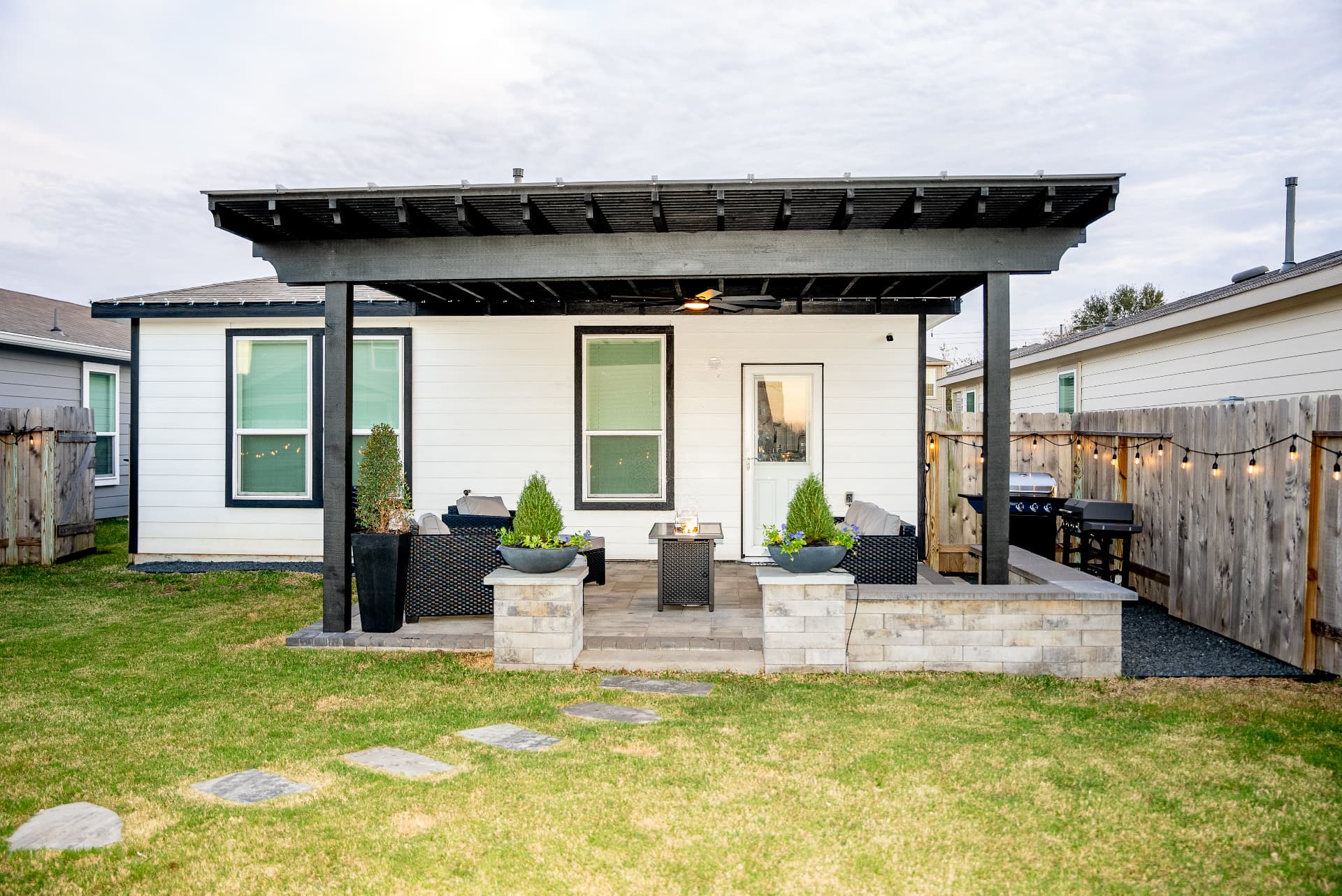
In League City, where outdoor living is a year-round priority, a quality paver patio is the foundation everything else is built around. Master-planned community properties with professional paver work consistently command higher resale prices and attract more buyer interest than those without.

01

Sand, Clay, and a Base That Has to Handle Both

The single biggest variable in a League City patio is what sits under it. Subdivisions built on old ranch and prairie ground toward the west side of the city tend to sit on the same expansive clay found across the region, while lots closer to the bay and the newer sections platted over fill can be sandy enough that water moves straight down through them. The two behave in opposite ways: clay swells and shrinks with moisture and pushes pavers out of plane, while sand migrates and lets a base wash out from underneath if it was never confined properly.

We probe before we price. A hand auger and a few test holes across the intended footprint tell us the depth of usable soil, whether there is buried builder debris, and how quickly water disappears. That determines base depth — typically six inches of compacted crushed limestone for a residential patio here, deeper where we find soft or organic material we have to cut out and replace. On sandy lots we add woven geotextile between subgrade and base so the two layers never intermingle, which is the failure mode behind most sunken corners we get called out to repair.

Compaction gets done in lifts. Dumping eight inches of rock and running a plate compactor across the top produces a crust with loose material underneath, and that becomes a soft spot two summers later.

02

What Salt Air Does to a Paver Field

Efflorescence — that chalky white haze that surfaces on new concrete pavers — happens everywhere, but proximity to the bay makes it more visible and more persistent. Salts already present in the cement migrate to the surface as moisture moves through the paver, and a humid coastal environment keeps that moisture cycle running most of the year. It is cosmetic, not structural, and it clears on its own over roughly the first year. We say so up front rather than let a client think a new patio failed.

What we do control is how fast it resolves and how good the patio looks in the meantime. We hold off on sealing a new installation until the field has been through a few wet-dry cycles, then clean with a proper efflorescence remover rather than acid, and seal with a breathable penetrating product that lets vapor escape instead of trapping it under a film. Film-forming sealers applied too early are how patios near the water end up cloudy and blotchy.

Salt also decides our hardware. Edge restraint spikes, any anchors tying a patio to a seawall or bulkhead, and fasteners in adjacent structures are stainless or hot-dip galvanized on every project this close to the bay — plain zinc-plated steel rusts through and stains the paver face within a couple of seasons. Polymeric jointing sand does the rest of the work, locking the field and keeping windblown grit and weed seed out of the joints.

03

Where the Water Goes When Rain Comes In Sideways

Gulf storms do not drop rain straight down. A tropical system pushes water horizontally against the back of the house, off the roof plane in sheets, and across a flat yard faster than any inlet can swallow it. Grading a League City patio to the code-minimum slope is not enough — we design a fall of about a quarter inch per foot away from the foundation, and we pick the discharge point before we pick the paver color.

On lots that back to a canal, a detention reserve, or Clear Creek tributaries, we can often daylight a drain line to a lower elevation and be done. On interior lots hemmed in by neighbors and fence lines, that is not available, and we build capacity instead: channel drains at the slab-to-patio transition, catch basins at low corners, and solid pipe carried out to the street or an approved outfall rather than dumping over the property line onto someone else's yard.

Permeable paver systems earn their keep here too. In sections where the yard drains slowly and impervious cover is already high, an open-graded base with permeable joints lets the patio take in the first inch of a storm rather than pushing it downhill. The square-foot cost rises, since the stone section runs deeper and the aggregate has to be cleaner, but on the right lot it removes an entire drainage problem rather than relocating it.

04

Layouts for Boat Weekends and Bay Breeze

A meaningful share of the patios we build in South Shore Harbour, Marina Bay, and the waterfront pockets off Clear Creek serve a specific weekend pattern: people arrive from the water, they are wet, they are carrying coolers and gear, and they want to sit down without tracking half the bay through the house. That pushes the design toward a hose-friendly transition zone near the gate or dock path, a paver surface with enough texture to be safe under bare wet feet, and seating clustered where you can see the water rather than centered on the back door.

Orientation matters as much as size. The prevailing southeast breeze off the bay is the best amenity a League City backyard has, and blocking it with a solid wall of built-in seating wastes it. We keep the windward side of the main gathering area open, put fire features on the downwind edge so smoke moves away from guests, and use low planted borders where the view and the airflow are the point. On interior lots in Tuscan Lakes or Westover Park the same logic applies at smaller scale — separate the dining and conversation zones with a change in paver pattern rather than a divider that eats the space.

05

Getting a Patio Through League City Plan Review

Unlike much of unincorporated Harris County, League City has an active development services department and a real review process. Ground-level patios on grade frequently fall outside building permit requirements, but the moment a project adds a roof structure, electrical, gas, a retaining wall above a certain height, or work inside a drainage or utility easement, review enters the picture. Impervious cover limits and drainage impact are the two issues that most often reshape a design here.

Our practice is to confirm what League City requires for your exact scope while the proposal is being written, put any fees in the contract in writing, and file the paperwork ourselves rather than leave a homeowner standing at a counter. Easements are the item we check first — a surprising number of Bay Area lots carry a rear drainage easement that no one thinks about until an inspector points at the new patio sitting in it.

HOA architectural review runs on a separate track in most of the master-planned sections. We assemble the package the committee actually wants — dimensioned site plan, paver manufacturer and color samples, drainage direction — and submit it on your behalf. Review windows vary by community, so we schedule construction around the committee calendar instead of assuming approval will land when convenient.

06

Budget Ranges and How to Read Competing Bids

Pricing here tracks the regional picture. Standard concrete pavers installed generally fall in the $14 to $25 per square foot range. Applied to the footprint most League City homeowners want — 300 to 500 square feet — that totals $6,000 to $14,000, moving within the band according to access, base depth, and how much old concrete has to come out. Premium natural stone and travertine carry a higher rate, roughly $22 to $38 installed. Multi-zone hardscape packages — patio plus walkway plus seat walls plus an outdoor kitchen pad — run above those bands, and we scope them line by line so you can see what each zone contributes.

Coastal-specific line items that change a number: geotextile and deeper base on sandy subgrade, stainless hardware, added drainage structures and pipe runs, and tearing out an existing slab and hauling the rubble away. None of those are upsells; they are the difference between a patio that is flat in ten years and one that needs a rebuild in four.

If you are comparing bids, ask each contractor four things in writing: base depth and material, whether they compact in lifts, what they use in the joints, and where the water leaves the property. A bid that is thousands cheaper almost always answers one of those with a shrug — usually a thin base or native sand in the joints. Ask for the drainage plan on paper. Anyone building patios in this city seriously will have one.

What you get

What League City homeowners get

Wide selection of travertine, concrete, brick & natural stone

Engineered for Houston's expansive clay soil

Slip-resistant surfaces for pool and wet areas

Custom patterns, borders and inlays

Integrated drainage to prevent water pooling

Low maintenance and extremely durable

How it works

Your League City project, step by step

01

Property assessment and drainage evaluation

02

Design, material selection & layout plan

03

Excavation and base preparation

04

Paver installation, sealing and cleanup

Paver Patios across League City

Our crews work throughout League City — including these neighborhoods and the surrounding area.

South Shore HarbourTuscan LakesMar BellaMagnolia CreekVictory LakesWestover ParkBrittany LakesHidden LakesMarina BayBay Ridge

Questions

Paver Patios questions from League City homeowners

Paver Patios near League City

More services in League City

Popular pairings with paver patios: Pergolas, Outdoor Kitchens, Water Features.

Request a quote

Ready for paver patios at your League City home?

Greystone Landscapes has designed and built outdoor spaces across Greater Houston since 2005. Get a free on-site consultation for your League City project.

(281) 235-9143